

Bringing on new call center agents is always a critical process. But when those agents are outsourced, the complexities multiply. The geographic distance, cultural nuances, and reliance on a BPO partner introduce unique challenges to training and onboarding. Yet, success hinges on getting this right. Ineffective training leads to frustrated agents, poor customer experiences, higher costs, and ultimately, churn – both for your customers and the outsourced team.
This comprehensive guide will walk you through the proven strategies and best practices for effectively training and onboarding your outsourced call center agents, ensuring they become high-performing extensions of your brand from day one. (For the broader BPO category context that frames why training is so high-stakes when an external partner is involved, see our complete BPO guide.)
Why Effective Training & Onboarding for Outsourced Agents is Crucial
It's more than just teaching agents how to answer calls; it's about embedding your brand's values, processes, and service standards into an external team. For outsourced agents, the stakes are even higher:
-
Brand Representation: These agents are often the primary touchpoint for your customers. Their performance directly reflects on your brand's reputation.
-
Customer Experience (CX) Consistency: Ensuring a seamless, unified CX across all channels, regardless of where the agent is located.
-
Agent Performance & Productivity: Well-trained agents are more efficient, resolve issues faster, and provide higher-quality support.
-
Reduced Attrition: Agents who feel confident, supported, and well-equipped are less likely to leave, reducing recruitment and retraining costs for your BPO partner.
-
Achieving ROI on Outsourcing: The cost savings and scalability benefits of outsourcing are only fully realized when your outsourced team delivers exceptional results. Training quality is also what determines how smoothly you can later scale the call center with your BPO when volume grows.
Pre-Onboarding Essentials: Laying the Foundation for Success
Before your first outsourced agent even logs in, a solid foundation is crucial.
1. Define Clear Roles & KPIs:
-
Specificity is Key: Clearly define the agent's responsibilities, decision-making authority, and escalation paths.
-
Outcome-Based KPIs: Go beyond just call volume. Focus on metrics like CSAT, FCR (First Contact Resolution), AHT (Average Handle Time), and adherence to quality standards. Ensure these are aligned with your overall CX goals.
2. Develop a Comprehensive Knowledge Base:
-
Centralized Source of Truth: Create an easily searchable, up-to-date knowledge base covering product/service information, FAQs, common issue resolutions, and company policies.
-
Accessibility: Ensure the BPO's agents have reliable access to this knowledge base from day one.
3. Prepare Technology & System Access:
-
CRM, Ticketing, Communication Tools: Provision all necessary accounts and permissions before onboarding begins.
-
Connectivity & Security: Work with your BPO to ensure agents have stable internet, appropriate hardware, and secure access protocols (e.g., VPNs, multi-factor authentication).
-
System Training: Outline specific modules for navigating each tool they'll use.
4. Cultivate Cultural Orientation:
-
Beyond Product: Introduce your company's mission, vision, values, and brand personality. Help agents understand the "why" behind your business and your customer philosophy.
-
Customer Profile: Paint a clear picture of your ideal customer – their demographics, common pain points, and expectations. This helps agents empathize.
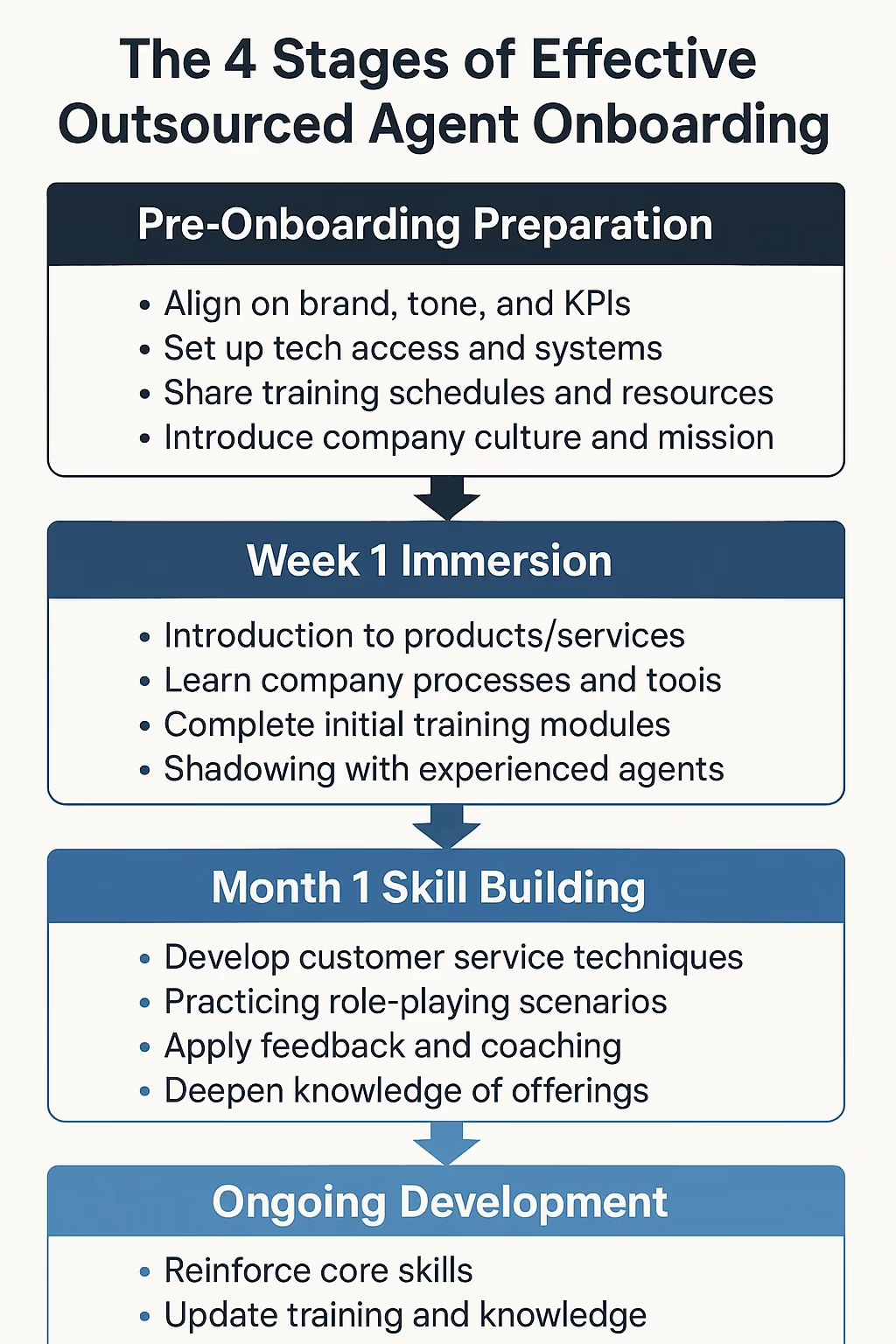
The Onboarding Journey: A Step-by-Step Process for Outsourced Agents
Onboarding is not a single event; it's a continuous process that evolves over time.
Week 1: Immersion and Fundamentals
-
Welcome & Introductions: A formal welcome from your team and BPO leadership. Introduce key contacts.
-
Company & Brand Deep Dive: Reinforce cultural orientation. Use videos, presentations, and interactive sessions.
-
Core Systems Navigation: Hands-on training for CRM, ticketing systems, and communication platforms.
-
Product/Service Basics: Cover the most common customer inquiries and how to find answers.
-
Initial Policy & Compliance: Key security and data privacy guidelines.
Month 1: Skill Building and Shadowing
-
Advanced Product/Service Training: Deeper dives into less common issues.
-
Call Flow & Scripting (Guidelines, Not Strict Scripts): Provide frameworks for effective conversations.
-
Active Listening & Empathy Training: Role-playing and simulated customer interactions.
-
Live Call Shadowing (Listen-and-Learn): Agents listen to experienced agents handle live calls.
-
Reverse Shadowing (Coach-and-Learn): Experienced agents listen to new agents.
-
Regular Check-ins: Daily or bi-daily meetings with trainers/supervisors.
Ongoing: Continuous Learning & Feedback
-
Weekly Huddles/Team Meetings: Discuss trends, share best practices, conduct mini-training sessions.
-
Performance Coaching: Regular 1:1 sessions based on KPI data and quality assurance scores.
-
Refresher Training: On new products, policy changes, or recurring issues.
-
Peer-to-Peer Learning: Encourage agents to share knowledge.
Core Training Modules for Outsourced Agents
Regardless of the BPO's existing curriculum, ensure these critical modules are covered:
1. Comprehensive Product/Service Knowledge:
- Not just "what" but "how it solves customer problems." Use case studies.
2. Customer Experience & Empathy:
-
Training on active listening, tone, emotional intelligence, and de-escalation techniques.
-
Role-playing difficult scenarios.
3. Communication Skills (Verbal & Written):
-
Clarity, conciseness, positive language.
-
For chat/email: grammar, professional tone, efficiency.
4. System & Tool Navigation Proficiency:
-
Hands-on practice with all software: CRM, ticketing, knowledge base, communication tools.
-
Troubleshooting common tech issues.
5. Compliance & Security:
-
Data privacy (GDPR, CCPA), PCI DSS (if handling payments), brand guidelines.
-
Mandatory certifications where applicable — and for team leads, consider the broader CX certifications that standardize quality vocabulary across your internal and outsourced teams.
Ensuring Effectiveness: Best Practices & Pitfalls to Avoid
Effective training isn't just about content delivery; it's about retention and application.
Best Practices for Maximizing Effectiveness:
-
Blended Learning: Combine self-paced modules (e.g., video, quizzes) with live instructor-led sessions, role-playing, and hands-on exercises.
-
Gamification & Engagement: Introduce friendly competitions, leaderboards, and rewards to motivate learning.
-
Regular Performance Reviews & Calibration: Consistent feedback sessions with agents and calibration calls with the BPO's quality team.
-
Robust Feedback Loops: Encourage agents to provide feedback on the training itself. Ensure insights from calls are fed back into training materials.
-
Cultural Sensitivity Training: For agents serving diverse markets, include modules on cultural nuances and expectations of your target customers.
-
Dedicated Training Environment: A sandbox environment where agents can practice without impacting live systems.
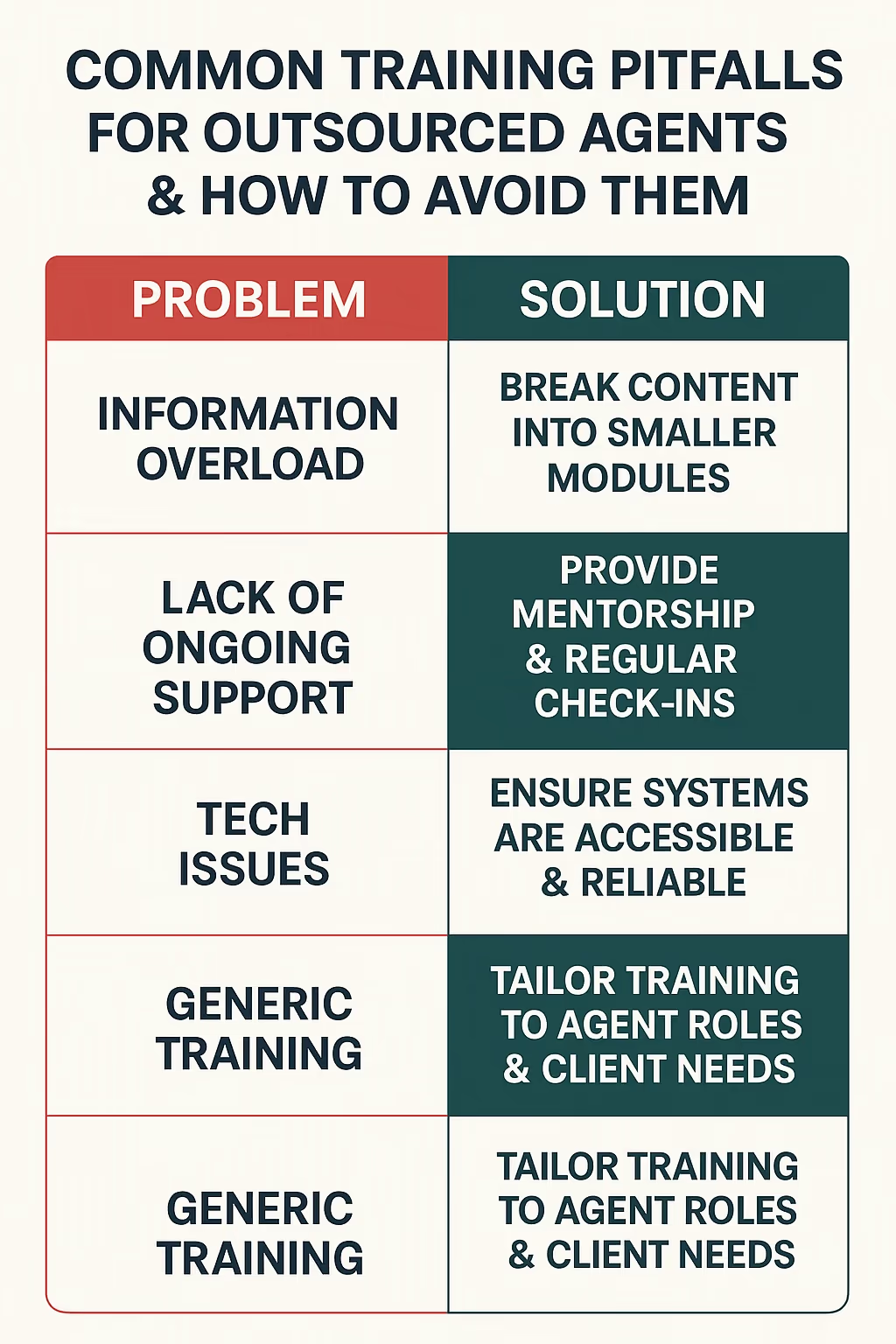
Common Pitfalls to Avoid:
-
"One-Size-Fits-All" Training: Not tailoring content to the specific BPO, market, or agent skill level.
-
Information Overload: Dumping too much information at once. Break it into manageable chunks.
-
Lack of Ongoing Support: Abandoning agents after initial training. Continuous coaching is vital.
-
Insufficient Technology Access/Training: Expecting agents to learn complex systems on the fly or with poor connectivity.
-
Ignoring Feedback: Not incorporating agent feedback into training improvements.
-
Inconsistent Quality Assurance: Without consistent monitoring, training gaps won't be identified.
Measuring Success: Key KPIs for Training & Onboarding
The only way to know if your training is effective is to measure it.
-
Training Completion Rates: Track how many agents complete all modules and pass assessments.
-
Post-Onboarding CSAT/NPS: Monitor customer satisfaction and loyalty scores for interactions handled by newly onboarded agents. Look for trends.
-
Average Handle Time (AHT) & First Contact Resolution (FCR): Track these after the initial onboarding period to see if agents are becoming efficient and effective.
-
Quality Assurance (QA) Scores: Regular evaluations of agent interactions against defined quality rubrics.
-
Agent Attrition Rates: High attrition among new agents often points to onboarding or training deficiencies.
-
Knowledge Base Usage: Are agents finding the information they need efficiently?
Conclusion
Effective training and onboarding of outsourced call center agents is not an expense; it's an investment in your customer experience and the long-term success of your outsourcing partnership. By meticulously planning, implementing a structured learning journey, leveraging best practices, and continuously measuring results, you can empower your outsourced team to become true brand ambassadors, delivering exceptional support and driving customer loyalty.
Ready to optimize your call center outsourcing strategy? Our CX experts can help you design and implement world-class training programs for your outsourced team.