
CSAT measures satisfaction with a specific interaction. NPS measures relationship-level loyalty across the entire customer journey in a single survey. CES measures how much effort a customer had to expend to complete a task. They are not interchangeable, and most CX teams should pick one as their primary metric. Running all three well takes more resources than most programs have.
The conventional advice on csat vs nps vs ces converges on the same recommendation: use all three together. That recommendation is convenient for the survey-software vendors who repeat it most often. It is rarely convenient for the CX team trying to run it. Most teams that try to layer three metrics produce three half-broken programs, and the score that actually drives operational decisions ends up being whichever one the CEO asks about in the Monday meeting.
This guide takes the contrarian position. Pick one. Pick by what your org will actually act on, not by what the textbook says. The rest of this post covers how the three metrics differ, the failure mode each one devolves into when teams run it badly, and the decision matrix for choosing the right one for your context. Forrester's 2024 US Customer Experience Index found CX quality at an all-time low after declining for an unprecedented third consecutive year, which suggests that adding measurement complexity isn't the lever most teams need.
The three metrics in 60 seconds
The standard framing is "relational versus transactional." That framing is too soft. The sharper distinction is journey versus touchpoint versus task.
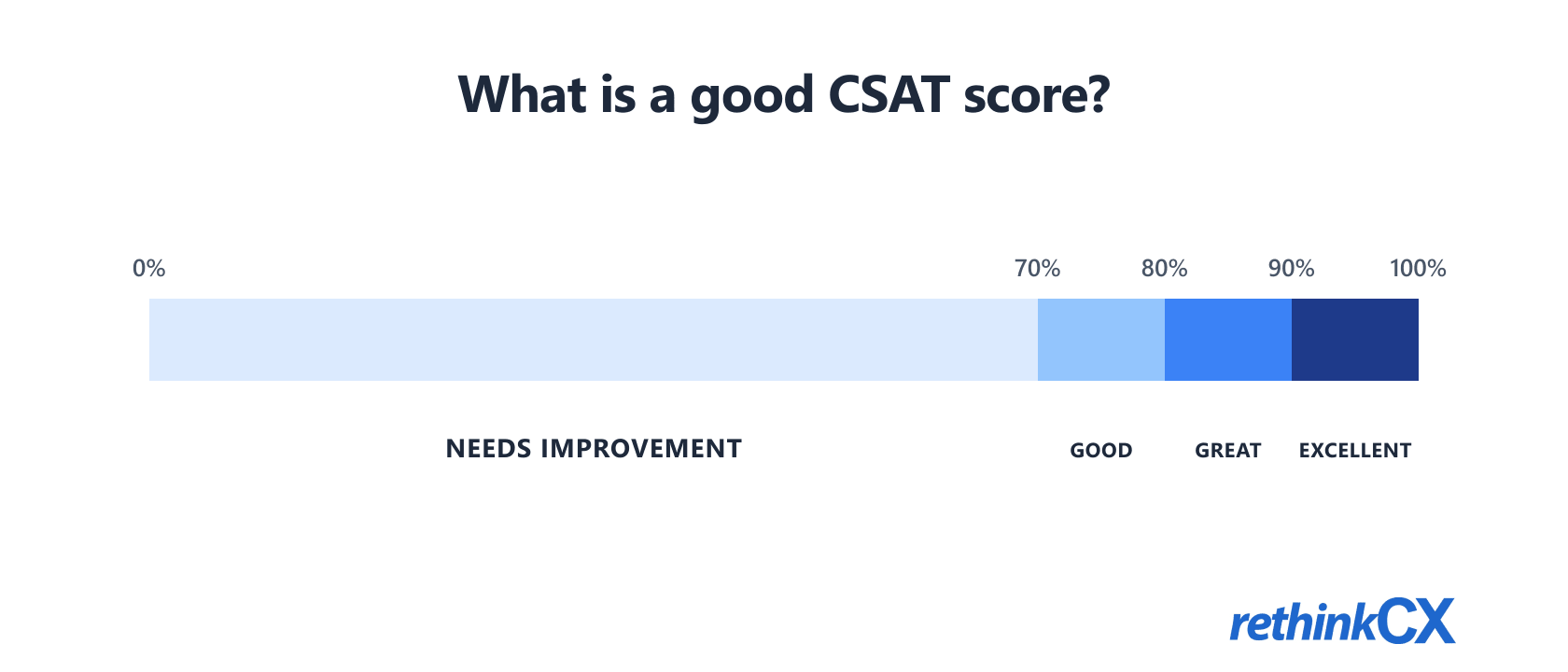
CSAT is a touchpoint metric. After a customer interacts with a specific moment in your operation, like a support ticket or an onboarding step, you ask how satisfied they were with that moment. The formula is straightforward: count the responses in the top one or two boxes, divide by total responses, multiply by 100. The signal is loudest right after the interaction. Sampled at a queue or channel level, it surfaces operational problems within days.
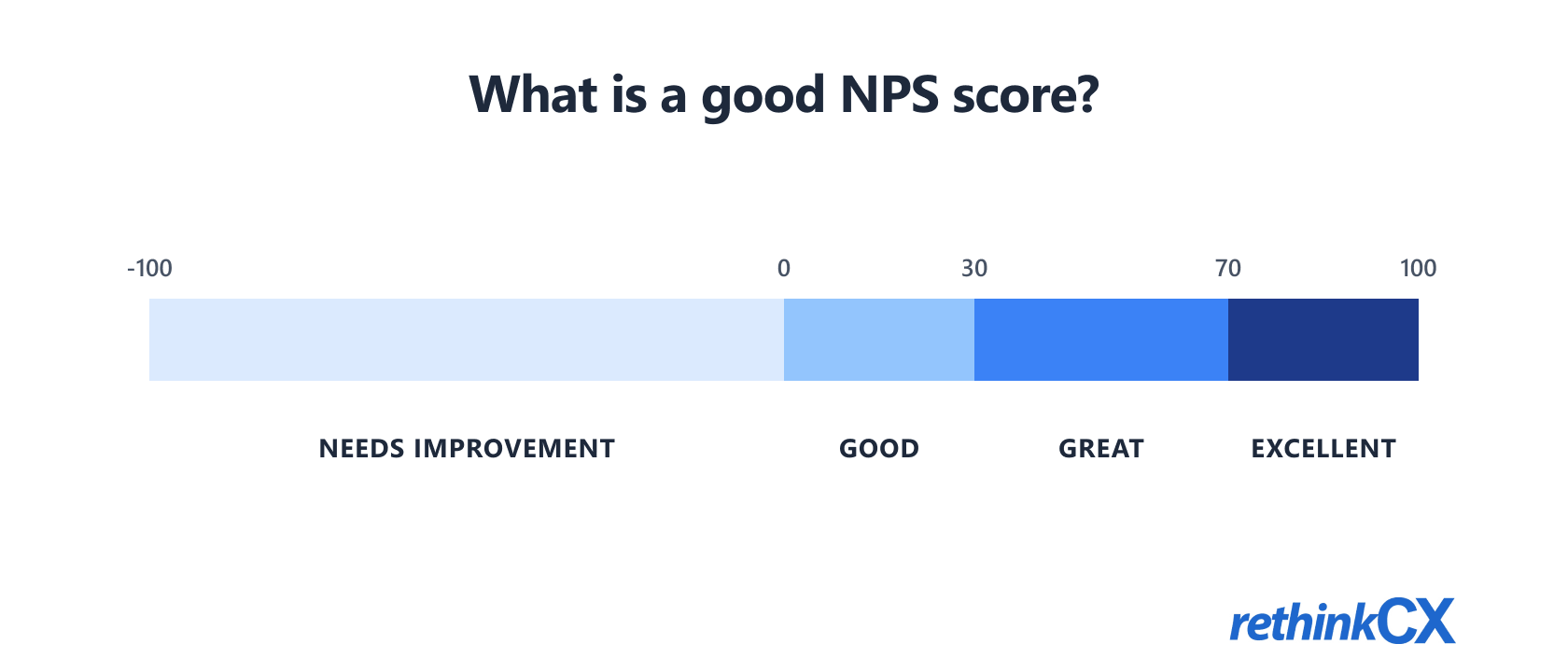
NPS is a journey metric. The whole point of NPS is to evaluate the entire customer journey in a single number that covers every department, every touchpoint, the logistics, the product, the support team, and the returns experience. You ask one question: "On a scale of 0 to 10, how likely are you to recommend this company to a friend or colleague?" Score is the percentage of promoters (9-10) minus the percentage of detractors (0-6). It's a relationship-level signal, not a touchpoint-level signal, and that distinction matters a lot for how it gets used. Once you've settled on NPS as a primary metric, the software you run it through is a separate decision; our NPS software comparison ranks the main tools by how well they turn the score into action.
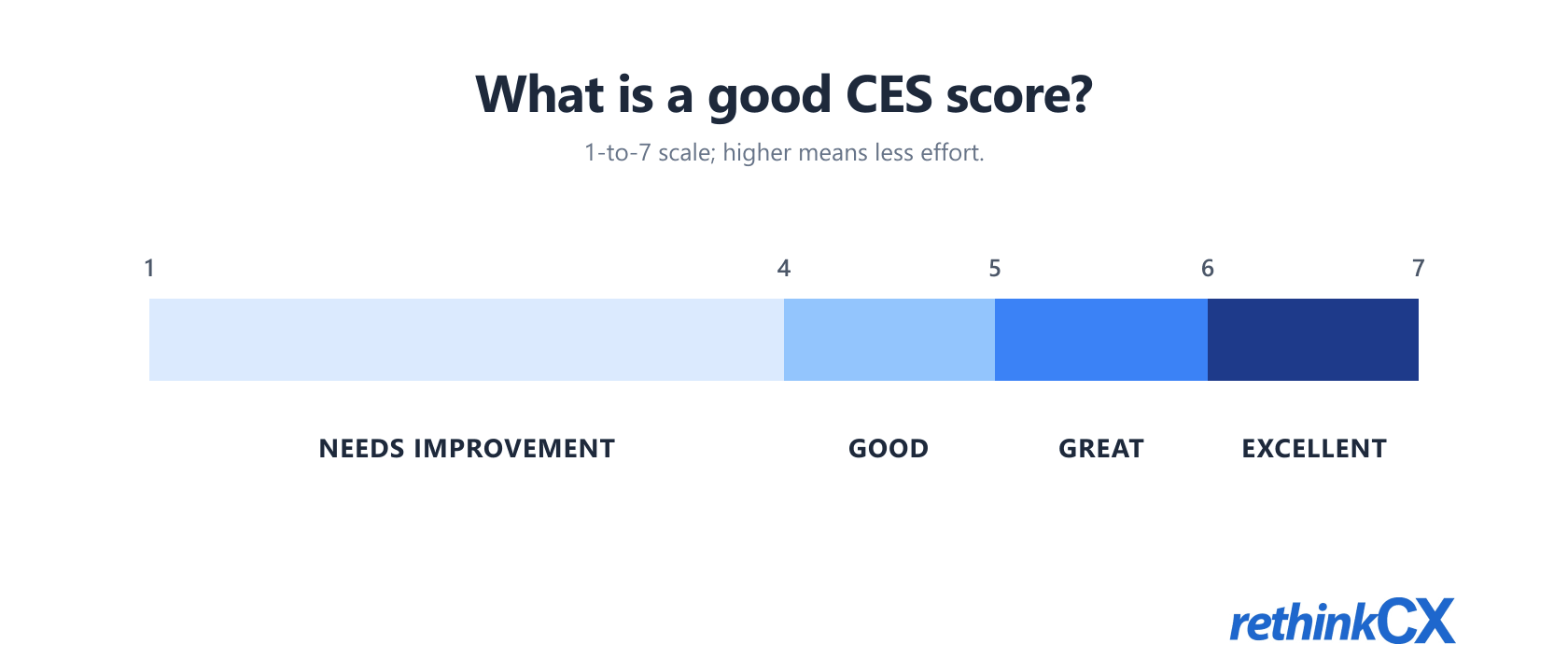
CES is a task metric. After a customer completes a specific task (getting an issue resolved, completing onboarding, finding a piece of information), you ask how much effort it took, usually on a 1-to-7 scale. The conceptual basis is the Effort dimension of CX: when interactions feel hard, customers churn. CES is mostly a SaaS-flavored metric, and we'll come back to where it earns its place and where it doesn't.
Here's the comparison at a glance. The "common failure mode" column is the one that matters operationally:
| Metric | What it measures | Signal level | Common failure mode |
|---|---|---|---|
| CSAT | Satisfaction with a specific interaction | Touchpoint | Quarterly aggregate slide nobody acts on |
| NPS | Likelihood to recommend after full journey | Relationship | Handed to CX team that can't structurally move it |
| CES | Effort required to complete a task | Task | Measured at moment of relief, reads inflated |
Read pairwise, the splits are simple. CSAT vs CES is satisfaction with a moment against effort inside a task: CSAT tells you how an interaction felt, CES tells you what it cost the customer to get through it. NPS vs CES is the whole relationship against a single task, which is why CES is the sharper leading indicator in product-led SaaS and mostly noise outside it. CSAT vs NPS is the one most teams get backwards: the split is journey versus touchpoint, not relational versus transactional.
For the broader measurement architecture these three sit inside, see our 22-KPI measurement stack.
Why "use all three" is the wrong default
The universal advice is some version of "you need all three because they measure different things." That's true definitionally. It's misleading operationally.
Running a single metric well requires more discipline than most CX programs have. You need methodology rigor on sampling and timing. You need dimensional tagging so the score is segmentable. You need a defined action workflow on what happens when the score moves. You need a forum where the score gets reviewed and decisions get made. You need someone who owns the methodology and pushes back when stakeholders try to game it.
Multiply that machinery by three and ask whether your team genuinely has the headcount, the political capital, and the leadership attention to do it. The honest answer for most mid-market and even most enterprise CX teams is no. What happens instead is one metric gets the real attention and the other two get collected, dashboarded, and ignored. You end up paying for three survey programs and getting one useful signal.
The "use all three" recommendation also assumes the three metrics will agree on the diagnosis. They often don't. NPS can be rising while CSAT is falling because brand equity is masking touchpoint degradation. CES on the support queue can be improving while NPS is dropping because the support experience isn't the bottleneck. When metrics disagree, teams without strong methodology default to whichever score makes the dashboard look healthiest, and the disagreement that should have been diagnostic becomes noise.
The alternative is unglamorous. Pick the one metric that maps to the decisions your org is actually equipped to make. Run it with discipline. Layer a second only when the first is genuinely operational and the team has bandwidth left over.
Pick by what your org acts on, not what the textbook says
Most "which metric should I use" frameworks list features per metric and let you decide. That's an abdication. The right question isn't which metric measures what you care about. It's which metric your org will act on. Action capacity is the binding constraint, not measurement choice. If you are unsure how much of it you actually have, that is the thing the CX maturity assessment measures.
The decision matrix that follows from that framing:
- You need a whole-journey signal the exec team can rally around → NPS. Measures the entire journey; moving it requires every department; works best when CX manages it but exec owns it.
- Your CX team owns operational triage at the touchpoint level → CSAT. Per-touchpoint signal surfaces failing queues, channels, and shifts within days.
- You're B2B SaaS and your product team owns reducing workflow friction → CES. Effort directly predicts churn via NRR degradation; sharpest leading indicator in product-led contexts.
- You have under 5 FTE on CX measurement → pick one, not three. Resource reality. Three half-broken programs lose to one strong one.
A few notes on the NPS row. NPS gets miscategorized constantly as a CFO-friendly board metric because it rolls up to one number. That framing misses what NPS is actually for. NPS is a whole-org metric: managed by CX, owned by the exec team, used by everyone. Moving NPS requires the marketing team, the product team, the support team, the logistics team, and the post-purchase team to act in concert. Treating it as a CX-team KPI sets up the CX team to be accountable for a number they can't structurally move alone. We come back to this in the failure-mode section.
The CES row is narrower than the conventional wisdom acknowledges. CES earns its place in product-led B2B SaaS where the action loop is "reduce effort on this workflow → retention improves." Outside that context (bolted onto ecommerce contact-center workflows, attached to broad consumer experiences), CES tends to produce noise without driving operational decisions. The metric is real; the contexts where it lands are narrower than the conventional positioning suggests.
For teams genuinely uncertain which to pick, the three-layer loyalty model is a useful priors check. It surfaces which loyalty mechanic your business actually runs on, which informs which metric will move in step with retention.
Failure mode per metric
The typical pros-and-cons listing of each metric is theoretical. The more useful framing is what each metric becomes when teams run it badly. Each one has a predictable failure mode. The discipline is defending against it.
CSAT failure mode: quarterly slide theater
The most common CSAT failure mode is aggregation into a single org-wide score that gets reviewed quarterly, dashboarded for leadership, and acted on by no one. A company-wide CSAT of 82% reported to the executive team contains no information. The interactions composing that average are too heterogeneous; the same aggregate number can compose a hundred different operational realities. Leadership sees a stable line and moves on. The CX team has no signal to triage from.
The fix isn't a different metric. The fix is dimensional tagging. Segment CSAT by touchpoint type, channel, team, agent, shift, and queue. Segmented CSAT is operational. Aggregated CSAT is theater. The teams that get value from CSAT have a workflow where every detractor triggers an intervention within 48 hours, and the metric is reviewed at the queue level, not the company level. CSAT lives or dies on this workflow. The right operational layer for it is a voice of customer program that builds the close-loop infrastructure before the survey goes out.
NPS failure mode: handed to the wrong team
The NPS failure mode that rarely gets named: most orgs assign NPS ownership to the CX team, where it can't structurally improve. Improving NPS requires the marketing team to align on brand promise, the product team to ship things that work, the logistics team to deliver on time, the support team to handle escalations well, and the post-purchase team to follow through. The CX team owns one piece of that picture. Holding them accountable for a whole-journey score is a setup.
The deeper miscategorization: NPS is functionally a marketing and sales metric, not a CX metric. Your promoters are the cheapest acquisition channel in existence. Think about how Tesla built a brand without a marketing budget. They built it on promoters who actively talked about the product to friends and family. That's the economic value NPS captures. Treating NPS purely as a CX scorecard misses what it's actually for and underweights the marketing and product investments that move it.
The passives are where the leverage is
A second NPS mistake most teams make: focusing recovery efforts on detractors. The conventional wisdom says detractors are the loudest signal, so chase them. The conventional wisdom is wrong, or at least incomplete.
Passives, the customers who score 7 or 8, are the highest-leverage group. They sit on the edge between becoming promoters and becoming detractors. Their next experience tilts them one direction or the other. A detractor who had a bad experience has already decided how they feel; recovering them is expensive and often doesn't change their advocacy behavior. A passive who had a slightly disappointing experience is one good touchpoint away from becoming a promoter, and one more bad touchpoint away from becoming a detractor.
During the period I was leading CX at Canada Goose, we ran a passives outreach program. After NPS surveys came back, we called passive responders to understand what had fallen short. Not to sell them anything, not to recover a refund, just to listen. Most of the time we didn't need to offer anything material. The phone call itself was the gesture. Customers were genuinely surprised that a company would reach out unprompted to ask about a 7 or 8. That surprise is the loyalty mechanic. The unexpected gesture creates the "you didn't have to do that" moment. We watched passives move into the promoter band on their next survey at materially higher rates than detractors we tried to recover.
This ties to what actually drives loyalty: the emotional surprise that compounds over time, not the transactional fix.
Scaling that kind of outreach beyond hand-dialing requires the operational close-loop tooling outside the rep's influence that makes passive triage trackable, not a side-of-desk hustle.
CES failure mode: the timing trap, survey proliferation, and SaaS-only fit
I'll be honest: I've never run a CES program directly. CES is mostly a SaaS-flavored metric, and the teams I've watched succeed with it were product-led B2B SaaS where reducing onboarding or feature-discovery effort directly moved retention. The teams that bolted CES onto ecommerce contact-center workflows mostly got noise. The three failure modes worth knowing:
Timing trap. Survey too soon and you catch the moment of relief. The customer just got their problem solved, so of course it felt easy. Survey too late and the customer is reconstructing from memory, which biases toward whatever their overall feeling has become. The right window is narrow, and most teams don't tune it. CES sent in the wrong window measures something other than the effort it was designed to capture.
Survey proliferation. Sending CES after every transaction balloons signal noise and respondent fatigue. HubSpot's survey-fatigue research makes the point that rushed or inaccurate responses follow directly from over-surveying, which means the score you collect at high volume is less reliable than the score you'd collect at lower volume. The principle is the same as CSAT: density of measurement matters less than discipline of measurement.
Mis-applied outside SaaS. CES is fundamentally a product-friction metric. It earns its place when "reduce effort on this workflow → retention improves" is a real causal chain, which describes most product-led B2B SaaS retention loops. Outside that context, CES often produces a score without driving operational decisions. Teams should be honest about whether their business model has the friction-to-churn link that makes CES useful, and pick something else if it doesn't.
What I'd do differently if I were building measurement from zero
Three things, drawn from what I've watched succeed and fail.
Time the survey to the journey, not to the calendar. The most useful operational decision I made running NPS at Canada Goose was choosing the survey timing carefully. Our return policy was 30 days post-delivery. Sending NPS at the 30-day mark would have captured the full return experience but risked the customer no longer remembering the purchase journey vividly. By that point, the buying experience was over a month old. Sending at the 7-day mark would have missed most of the returns data.
We landed on 14 days post-delivery. The reasoning: 80%-plus of returns happened within 14 days, so the survey captured almost all of the returns experience while preserving recency of the rest of the journey. That timing decision did more for the quality of our NPS signal than any methodology change we made downstream. Most teams pick survey timing by convention (quarterly, monthly, post-interaction) without thinking through what their specific journey requires. Start with the journey shape, then back into the timing.
Build the action workflow before launching the survey. Most teams launch the survey first, end up with a pile of detractor responses they can't action, and the metric becomes a slide instead of a workflow. Build the response process first. Decide who gets the alert, what they're authorized to do, and how the outcome gets tracked. Then launch the survey. Surveys without action workflows produce score dashboards that compound into nothing.
Tag at the agent and queue level, not just the team level. Per-agent CSAT and per-queue NPS are politically uncomfortable and operationally high-leverage. The teams that resist this granularity usually do so because the granular numbers will surface uncomfortable truths. That's the point. The discomfort is the signal. Without dimensional tagging, the metric averages away the operational specificity that makes it useful.
When (and how) to layer a second metric, if you must
For teams that have the bandwidth to run more than one metric, the disciplined approach is to layer the second metric based on what the first one can't see, not based on what looks comprehensive.
If your primary is NPS, the natural second metric is CSAT, because NPS gives you the journey-level signal but doesn't tell you which touchpoints are dragging it down. CSAT segmented by touchpoint fills that gap. If your primary is CSAT, the natural second is NPS, because CSAT gives you touchpoint quality but no read on whether the relationship is improving overall. If your primary is CES, the second is usually NPS at the account level, since CES tells you task-level friction but not whether the friction is translating to advocacy or churn.
Two layered metrics with disciplined ownership beat three with sloppy ownership every time. The operational layer that makes layering work is voice-of-customer program design: the infrastructure that lets multiple signals coexist without becoming noise.
Pulling it together
The conventional answer for csat vs nps vs ces will keep being "use all three together." The vendors who repeat that recommendation benefit from it. Your CX program benefits from picking the one metric your org will actually act on, running it with methodology discipline, and building the action workflow before scaling the survey program.
CSAT for touchpoint operational triage. NPS for whole-journey signal the whole company owns and the exec team rallies around. CES for product-led B2B SaaS where friction directly maps to retention. Under 5 FTE on measurement, pick one.
Whichever you pick, the score is only the input. The analytics layer above the metric is where a number turns into a decision somebody is accountable for making.
For the broader strategic frame these metrics sit inside, rethinkCX's CX strategy advisory covers the measurement-to-action loop in full.
The metric you pick matters less than the discipline you bring to running it. Three half-broken programs lose to one operational one. Pick one. Build the workflow. Defend against the failure mode.